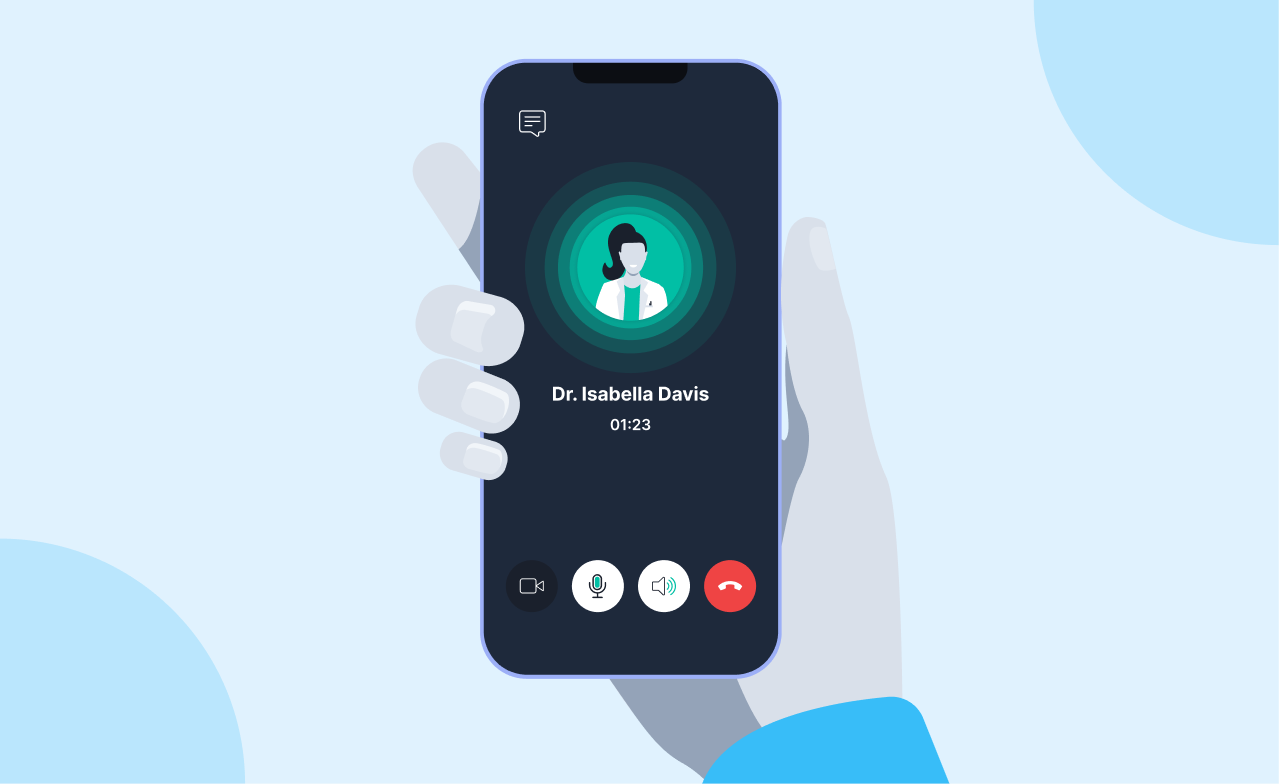
Audio-only telehealth is not a secondary option – among Medicare beneficiaries who are 65 years of age or older, 56.5% used audio-only visits rather than video and more than 26% indicated they do not own a computer or smartphone. Medicare now allows audio-only visits permanently for patients at home who lack the ability to use video or do not give permission for video use. For medical groups with 2 – 50 clinicians, the telephone visit is a service that requires deliberate organization. The process includes specific scheduling layouts, methods to record permission and standard text for medical records. It is not a mistake that a clinician must record manually at the end of the day.
Why do so many patients choose audio-only?
Many telehealth software programs treat a phone call as the result of a video failure. The data regarding use shows the opposite trend. Peer-reviewed research on audio-only use among traditional Medicare beneficiaries indicates that audio-only interactions represent a large and steady portion of virtual healthcare – those visits occur most often among older individuals, residents of non-urban areas and individuals with lower financial resources.
The causes relate to functional limitations rather than personal preference:
- Lack of hardware – more than 25% of Medicare beneficiaries do not have a computer or a smartphone in their residence.
- Lack of consistent internet speed – internet gaps in non-urban areas make video transmission impossible even when the hardware is present.
- Lack of familiarity with software – requirements for camera access, software downloads and digital waiting areas create difficulty for patients who have not used those tools previously.
- Lack of intent to use video – some patients refuse video and the law specifically allows for this choice.
Telehealth represents a small portion of the total number of medical visits. It increased from 5.01% to 5.51% of national medical claim lines between Q4 2025 and Q1 2026. Medical groups that increase virtual visit numbers are the ones that contact patients using the technology the patients already possess.
Where does audio-only policy actually stand?
Two different regulations are important to distinguish:
- Audio-only for non-behavioral Medicare telehealth is legal until December 31, 2027. The CY 2027 Physician Fee Schedule proposed rule, which the government published in July 2026, continues this policy along with geographic exceptions and more locations where visits can start.
- Audio-only is a permanent option for patients at home who cannot use video or do not permit video, according to the telehealth policy tracker at Telehealth.HHS.gov.
The second regulation alters how a medical office functions – it is a permanent rule and it depends on information that a clinician must record during the appointment.
What does the documentation trap look like?
The permanent permission depends on the patient being unable or unwilling to use video. It is a detail of one specific medical meeting and a clinician must record it during that meeting.
The problem occurs during the attempt to recreate records later. In ninety days a billing employee views a note that contains “phone visit” and must guess the reason for the format. The billing code was not used. The permission was not recorded. The insurance company refuses payment and the request for payment depends on a memory that no staff member possesses.
To design for this requirement, a medical group must ensure the software asks the question about the visit type directly:
- There is a specific data box for the visit type, which a staff member completes when the visit begins rather than at the end.
- There is a specific data box for the reason when the visit is audio-only – no hardware, no internet speed, patient refusal of video or technical problems during the call.
- The recording of permission connects to the visit record and includes a time record.
- The billing codes appear automatically based on those data boxes instead of being selected by the billing employee.
And the setup of the software platform determines the outcomes. It is necessary to ask a software company how their system records the visit type before a medical group needs that information for an insurance appeal.
How should audio-only visits be scheduled differently?
Phone visits are not simply video visits that last for a shorter time. They function in a different way. If a medical group treats them as identical, the daily schedule becomes late and the initial patient data remains incomplete.
| Design element | Video visit | Audio-only visit |
|---|---|---|
| Appointment length | Normal | Often shorter for follow-up visits – longer for new patients with many health issues |
| Pre-visit data collection | Digital form for patients | Staff help by phone or text, as digital access is often the obstacle |
| Proof of identity | Visual check | Spoken check, following a script and recorded |
| Medical measurements | Some visual checks | Only what the patient says, which changes what is medically correct |
| Follow-up schedule | Normal frequency | Often more frequent, as the clinician sees less during the meeting |
| Failure result | Change the time | None, because the phone call is the visit |
The final row is the most significant. There is no alternative available if an encounter that relies solely on audio fails. When administrators design phone-based medical care only as a fallback for video-based communication, no other options exist when technical problems occur.
The results of treating phone-based encounters as a secondary priority
Small medical practices experience a predictable set of errors:
- The software records the communication method in a text box that lacks structure, which prevents administrators from generating reports or performing audits.
- The system fails to include billing modifiers because the digital process does not prompt the staff to add them.
- There is no official documentation regarding the agreement of the individual or their inability to use video, which weakens the legal basis for providing care in a permanent home setting.
- Insurance companies send payment rejections ninety days after the event, which is long after the staff can find the specific details of the interaction.
- The leadership has no data on the total number of interactions – the practice cannot determine if audio-only care represents 5% or 35% of its digital services.
It is inexpensive to prevent those problems through software settings but it is expensive to resolve them during the process of appealing denied insurance claims.
Criteria for directing specific individuals to audio-focused care
Administrators should direct individuals to specific channels by design rather than by chance. The following groups are appropriate for audio-first outreach:
- Individuals who are older than 75 years and have never logged into the digital portal.
- Individuals who have a recorded history of being unable to maintain a video connection.
- Individuals who live in remote geographic areas where internet speeds are low.
- Established individuals who take long-term medications for chronic illnesses and require routine check-ins.
- Individuals who previously selected audio-only communication by their own preference.
The manner in which a practice presents the options is important. To offer a phone call as the primary choice for those individuals is a helpful adjustment to their needs. To offer it only after a video call fails is a reduction in the quality of the service.
Implications for the choice of a software platform
Many purchasers fail to ask about audio-only capabilities during software demonstrations, which makes this a helpful topic for evaluation. As you analyze white label telehealth platforms with HIPAA compliance, you should ask how the system records the method of communication. You should also check if the system captures agreement in a structured way, if audio-only encounters can use their own scheduling formats and if you can see the mix of communication methods in a report without moving data to an external document.
The Healee platform is responsible for more than five million appointments for over one million individuals across more than two hundred clinics. The design is multi-channel and treats the telephone as a primary method of communication like chat, video or secure messaging – but it does not treat the phone as an inferior option. Medical practices that are looking at custom branded digital care can request a demo to observe how the software records communication methods and manages schedules.
The individuals who are most likely to require audio-only care are the ones with the lowest amount of technical resources and the highest level of risk. To design systems for them intentionally is a medical choice and a financial choice because of the nature of documentation requirements.
Common inquiries
Does Medicare still provide payment for audio-only telehealth?
Yes. Medicare provides coverage for audio-only services that do not involve behavioral health until December 31, 2027 – this coverage is permanent for individuals at home who are unable to use video or who do not agree to use video. Services for behavioral health have had their own long-term rules for audio-only payment.
What documentation is necessary for an audio-only interaction?
The staff must record the communication method and the reason why video was not used, like the refusal or the lack of ability of the individual. They must also record the agreement of the individual and the correct billing code modifier – those details are necessary during the actual encounter rather than during the later billing process.
What percentage of telehealth is conducted via audio-only?
The percentage changes based on the specific group of individuals. In surveys of individuals who are 65 years or older, 56.5% used audio-only instead of video. Individuals who are younger or have higher financial resources use video more often.
Is it appropriate to schedule audio-only visits in the same time blocks as video visits?
It is usually not appropriate – the patterns for gathering information, verifying details and conducting follow-up tasks are different. Separate scheduling templates create more reliable daily plans and better adherence to documentation rules.
Is a white label telehealth platform able to manage audio-only as a specific type of visit?
It is dependent on the specific software – you should ask if the communication method is a structured data field and if audio-only visits can use unique templates and agreement forms. You should also ask if the data regarding the mix of communication methods is visible in the reporting tools.
Sources:
- Audio-Only Telehealth Use Among Traditional Medicare Beneficiaries – JAMA Health Forum
- Updated National Survey Trends in Telehealth Utilization and Modality – ASPE, US Department of Health and Human Services
- Telehealth policy updates – Telehealth.HHS.gov
- Calendar Year (CY) 2027 Medicare Physician Fee Schedule Proposed Rule – CMS, 2026
- Telehealth, AI, and Digital Health News Briefs: July 2026 – Telehealth.org, 2026