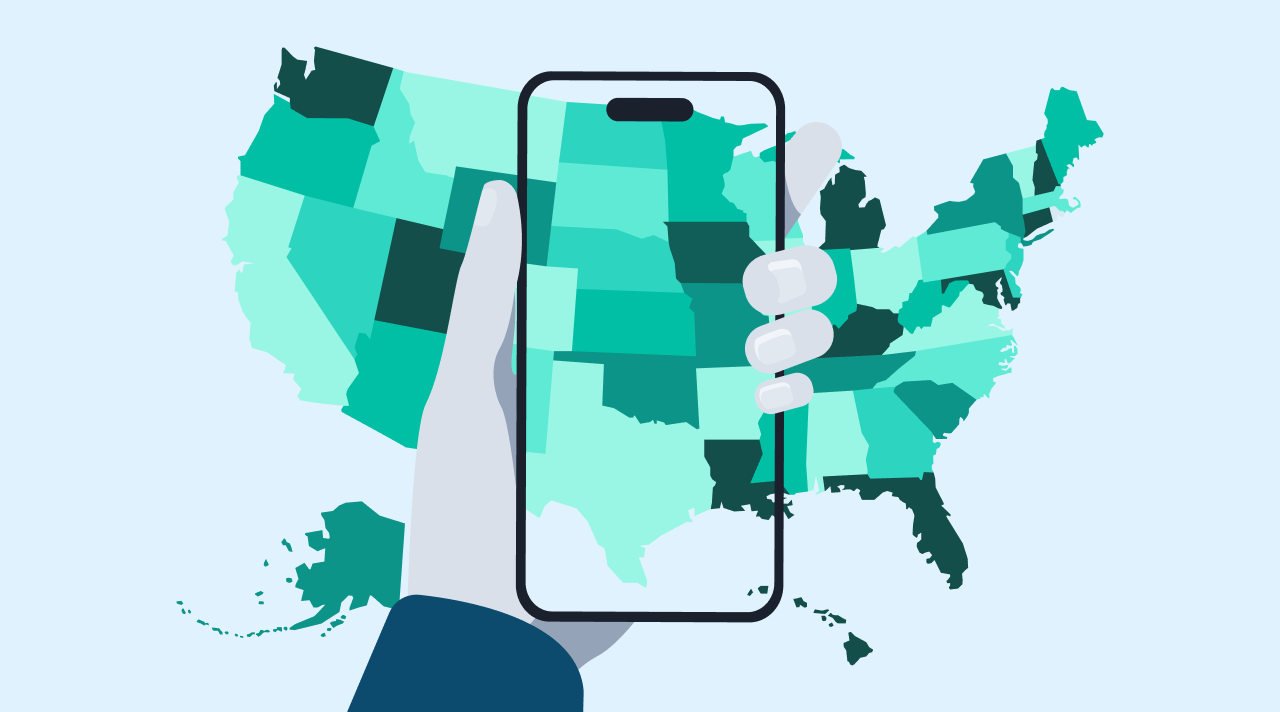
In February 2026, four states moved forward with separate laws that regulate medical care delivered through technology. There are specific rules in each location regarding how insurers pay providers. There are also rules about which methods of communication are legal. For a medical office with five employees, those varied rules cause daily problems in work processes.
Here is what is actually changing, where the compliance traps are, and how practices are managing it without in-house legal teams.
State telehealth laws are changing faster than most practices can track
It is difficult for a small office to monitor how quickly those laws change. According to the National Law Review, many states updated their rules in February 2026. In Mississippi, officials advanced rules for medical cannabis consultations. Tennessee introduced limits on how its state health plan pays for virtual visits. Virginia established a network for patients with sickle cell disease. Washington increased the amount of maternal care that the state health plan covers through video or phone.
By changing those rules, states create different requirements for medical licenses. There are also different codes for billing and different methods for recording data. And that is just one month.
As Of Digital Interest explains, state rules connect with national rules in ways that are hard to understand. For an office that works in more than one state, this situation is complex.
Where compliance traps catch small practices off guard
To avoid legal problems, a practice must look at small details. The biggest risks are not in the headline legislation. They show up in the details that differ from state to state.
Audio-only billing rules vary widely
In Nebraska, the state health plan now pays for mental health services that happen over the phone. According to Epstein Becker Green’s telemental health overview, New York also has rules that allow phone-only visits — but other states do not provide money for those visits. If a mental health practice has patients in three states, it might receive payment in one state and a request for a financial review in another.
Originating site requirements still differ
On the topic of where a patient is located, rules remain different across borders. Some states allow a patient to stay at home during a visit. Other states require the patient to be in a professional building like an “originating site”. If a doctor thinks home visits are always legal, the insurance company might refuse to pay the bill.
Licensure compacts help, but do not solve everything
And while some agreements make it easier to get licenses in multiple states, those do not apply to everyone. Psychologists have their own agreements that are separate from those for doctors. In a clinic with many types of workers, some employees can see patients in other states while others are not allowed.
How multi-state practices are managing this today
To manage those issues, many practices use three specific methods.
Dedicated compliance tracking. For some practices, an employee has the job of watching for new laws in every state. For larger groups, this might mean subscribing to legal update services. For smaller practices, it often means relying on professional associations and specialty-specific newsletters.
Technology that adapts to state rules. Other practices use software that changes its settings based on where the patient lives. In those systems the forms for consent and the codes for billing change automatically. Practices using white label telehealth platforms can often set up those rules within their own branded system rather than building custom logic.
Conservative billing practices. By using a careful approach to billing, some offices avoid risk. If a rule is not clear, those offices follow the most difficult requirement to ensure they obey the law — this choice prevents legal reviews but it also means the office might receive less money than the law allows.
A practical checklist for practices expanding across state lines
To expand across state lines, a practice must check specific areas of its operations.
- Provider licensing: By checking the credentials of each practitioner, you ensure that every person who gives care has a valid license in every state where they work, and verify if they belong to a compact that permits them to practice across borders
- Modality restrictions: When you examine local laws, you confirm that specific methods like audio-only visits are legal, and check if insurance companies pay for asynchronous communication
- Originating site rules: In every state you must find out if a patient is allowed to stay at home during a session, or if a facility is the only place where a person can receive those services
- Consent requirements: With some states the law says that a patient must sign a paper to show they agree to telehealth, but other states allow a person to give their agreement out loud during the call
- Prescribing limitations: If you prescribe medications, you must follow rules for controlled substances that differ depending on the location — those rules are not stable and they vary from one region to another
- Documentation standards: To keep accurate records, you adjust your EHR templates so they contain the details that Medicaid requires, and for commercial insurers your visit notes must include the specific information that those companies demand
- Billing code compliance: By selecting the right codes, you show the correct place of service for every bill, and use the specific modifiers that each state requires for payment
What federal legislation might simplify, and what it will not
As the CONNECT for Health Act moves through Congress, it aims to make some Medicare rules permanent. If the law passes, the government will stop restricting where a patient must be located to get care. There is also a plan to increase the categories of clinicians who are allowed to provide virtual services.
But federal laws are not able to make every rule the same everywhere. Since states have the power to control Medicaid, they set their own rules for how those programs work. For private insurance, state governments decide what those companies must cover. If a national system starts, it makes things less complicated but differences between states remain. Because of this, medical groups must monitor local changes for a long time.
By joining interstate compacts, professional boards make it easier for people to get licenses — but some professions move slowly when they adopt those new agreements. On this matter, some states choose not to join a specific compact at all. Progress is happening, but “one set of rules for the whole country” is a goal that is still many years away.
Building your virtual care strategy on solid ground
For a small practice, the difficulty of following rules in many states is a permanent challenge. If you use the right systems, you are able to handle those tasks. In many cases, successful groups use software that applies state rules automatically. By doing this, they do not ask doctors to memorize the laws of every state.
With a well-configured white label telehealth platform, the system shows the correct consent forms based on where the patient lives. It is also possible to block certain appointment types that are not legal in a specific area. To help your staff, the system applies billing rules that match the local requirements.
When you look for a platform, you should check how easily you can change its settings. It is important that the software has tools that help you stay compliant. As laws change, the system must be able to update its functions quickly. You can explore Healee’s white label platform to see how others solve those problems with a single branded system.
Sources:
- Trending in Telehealth: February 2026 – National Law Review, 2026
- Trending in Telehealth: February 2026 – Of Digital Interest, 2026
- Telemental Health Laws 2026 Overview – Epstein Becker Green, 2026