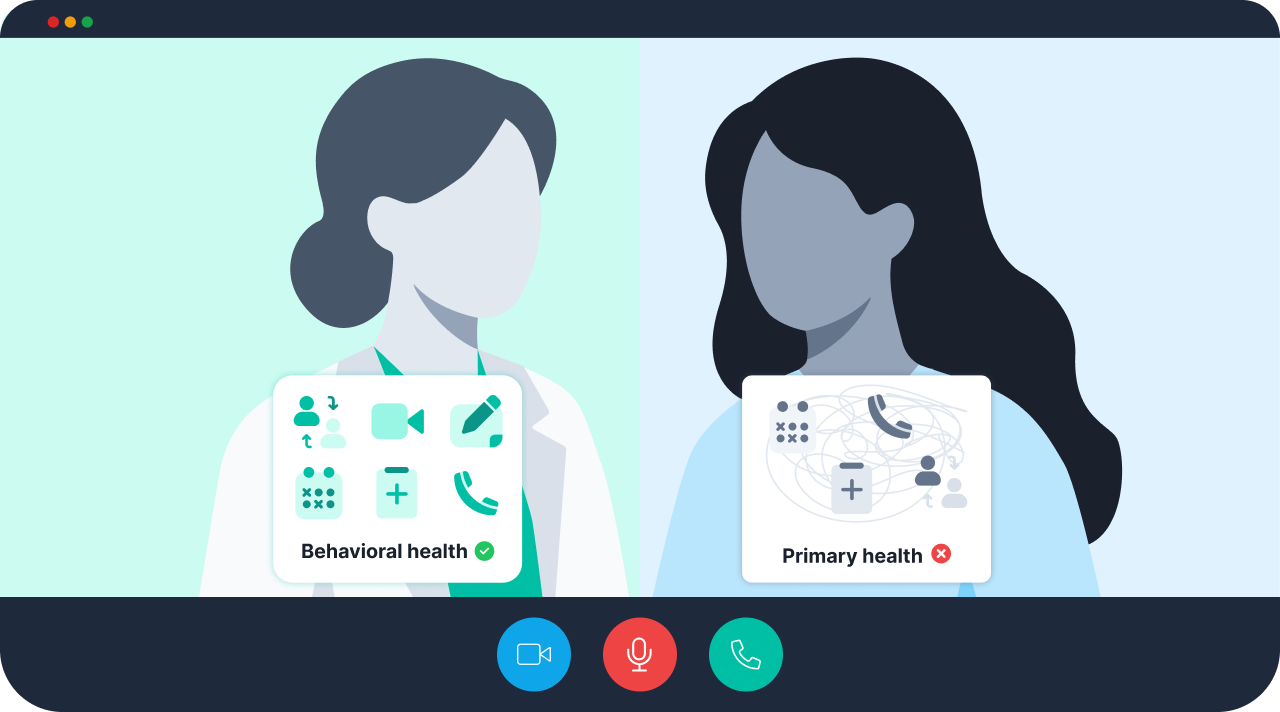
The figures are blunt – psychiatrists hold 56.9% of every week’s visits online, whereas family doctors hold only 20.1%. The gap is not about clinical suitability – family physicians diagnose and treat many conditions without an office visit. The split stems from how platforms manage workflows, how payers reimburse and how well the tool fits the specialty.
Grasping why behavioral health rules virtual care exposes awkward facts about software design and gives practical pointers for any practice weighing telehealth.
The numbers vendors rarely mention
American Medical Association data show 85.9% of psychiatrists use telehealth each week, against 71.4% of all physicians. The specialty table leaves behavioral health far ahead.
- Psychiatry: 85.9% weekly use
- Family medicine: 20.1% weekly use
- Internal medicine – roughly the same low figure
The distance is not marginal – it is a four fold gap between specialties that treat patients of comparable complexity.
Platform marketers usually cite clinical fit: “Therapy works well virtually” The claim is accurate but partial. Primary care handles many problems through video – follow ups, prescription checks, minor acute complaints, chronic disease surveillance. Clinical suitability alone cannot explain the chasm.
Why behavioral health thrived while primary care lagged
Medicare policy built permanent rails
The decisive element: behavioral health visits from home gained permanent Medicare coverage, while most other services still face stop start rules. The difference was regulatory, not medical.
When a practice knows the fee schedule will not vanish, it buys equipment, trains staff and rewrites routines. Primary care groups that watch temporary waivers expire every few months hesitate to pour money into a workflow that might lose payment next year.
Behavioral-health vendors designed for this fixed landscape – they added features on the assumption that virtual work would stay central, not remain a pilot.
Workflow design follows specialty demand
General-purpose video tools treat every encounter the same – book, click, hang up. Behavioral-health practice needs more:
- Session-note templates shaped for therapy notes
- Crisis protocols that flag high risk patients
- Secure messaging for contact between visits
- Outcome tracking to chart symptom change
- Group-room tools for multi patient therapy
Primary-care platforms often began as consumer video chat with a scheduler bolted on. Behavioral-health platforms were drafted from the first line for repeat encounters and for mental health documentation rules.
Appointment economics reward virtual care
Research from CIVHC shows behavioral health accounts for 58 percent of all telehealth visits. The pattern reflects not only uptake but also hard economics.
A therapy session normally runs 45 – 60 minutes – driving sitting in the waiting room and finding parking usually add about the same amount of time. Virtual care removes roughly half of that total time burden for the patient. For the clinician, fewer missed or late appointments protect paid hours.
A routine primary care visit lasts about 15 – 20 minutes – virtual care still adds convenience but the percentage of time saved is smaller – the economic incentive is weaker.
Patient expectations mirror the service model
People who need mental health care often ask for telehealth outright. Reduced stigma, flexible scheduling and the comfort of home fit the aims of therapy. Many will change clinicians to keep virtual sessions.
Primary-care patients split in their wishes – some value the convenience of a screen visit – others want an in person exam for reassurance. Because demand varies, practices need hybrid processes instead of a virtual first rule.
What primary care misunderstands about platform choice
The striking success of telehealth in psychiatry gives other specialties a blueprint but most practices overlook the key points when they shop for platforms.
Mistake 1: Picking a video tool instead of a practice platform
Many primary care offices chose consumer video services like Zoom or Doxy.me after assuming that telehealth equaled “video calls” A basic video link works for a quick chat but collapses when the goal is integrated care.
Behavioral-health platforms build virtual care into every layer of the operation:
- Patient intake and onboarding
- Scheduling that matches patient to clinician
- Documentation tied to clinical workflows
- Follow-up messages and care coordination
- Outcome analytics
When primary care offices bolt a video window onto old workflows, fragmentation follows. Staff schedule in one place, hold the visit in another, write notes in the EHR and send reminders from but another inbox. The added steps slow everyone down and uptake stalls.
Mistake 2: Acting as if telehealth is a stopgap
Ongoing uncertainty about Medicare extensions pushes practices to treat virtual care as a pilot instead of a pillar. Minimal effort produces minimal payoff and the poor result reinforces the belief that telehealth has little value.
Mental-health clinics invested in full virtual infrastructure because reimbursement rules were stable. That certainty let them streamline workflows, train staff and polish the patient experience. Quality rose because they treated the technology as permanent business plumbing.
Mistake 3: Overlooking whether telehealth replaces or piles on to existing services
Data from nine health systems shows telehealth mainly takes the place of face-to-face appointments instead of creating extra ones. Virtual visits jumped 31 times over but the total number of appointments per patient rose by only 0.25.
Behavioral-health platforms accept this fact and use scheduling tools that divide capacity between virtual and office visits. Primary-care clinics usually tack telehealth onto existing operations without rethinking how many patients they can handle, which causes clashes in daily routines rather than better access.
Three questions that predict whether telehealth will work
The technology choices of psychiatrists show what truly drives the uptake of virtual care. Before buying any system, a practice should answer the following.
Question 1: Does the platform fit your workflow or does it demand that you change?
Behavioral-health platforms expect asynchronous messages, repeat appointments and outcome tracking because those steps mirror how therapy proceeds. Requiring clinicians to squeeze into a generic video template breeds resistance.
What to check
- Does the platform support the kinds of visits you run – follow ups, acute problems, chronic disease checks?
- Does the schedule match the way your office really functions?
- Can staff operate the system after short instruction?
- Does documentation flow into clinical routines?
If you must redesign your processes to suit the platform’s limits, you picked the wrong product.
Question 2: Can you tailor the system without starting from scratch?
Psychiatry offices need features built for therapy – primary-care offices need different tools – perhaps remote monitoring, disease management protocols or team coordination. A generic platform will need custom code – a purpose built platform offers switches and dials you can set yourself.
What to check
- Can you alter workflows without asking the vendor to write new code?
- Are changes reserved for your practice or must every customer receive the same revision?
- Does documentation follow the rules of your specialty?
- Can you bolt on new features as needs shift?
A single tenant platform lets you shape the software around one practice. A multi tenant platform forces every user to share the same feature set – no group is served perfectly.
Question 3: What will happen the next time Medicare rules shift?
Temporary telehealth extensions keep expiring – a practice needs a platform that can react fast to new billing or coverage rules. Behavioral health has enjoyed steady payment policy – primary care faces repeated uncertainty.
What to check
- Can the platform update billing logic and coverage tests within days?
- Does the vendor watch for regulatory changes and patch the system without being asked?
- Can you move between office and virtual workflows with one click?
- Does the platform let you fall back on other care models if telehealth is restricted?
A platform built for the steady reimbursement of behavioral health may stall when primary care rules lurch. The vendor’s speed in reacting to policy shifts counts more than a long list of features.
The way the platform is built matters more than the marketing pitch
The behavioral health success story shows that technology choices shape operations for years. Practices that picked platforms built for their specialty used them widely – those that settled for ordinary video software met constant friction.
Platform architecture – whether each client receives separate infrastructure or shares it with every other user – sets the ceiling for customization, the walls around data and the speed of change.
Single-tenant platforms give each practice its own server space. The practice keeps its own copy of the software – it can shape forms, flows and features to match how it works plus grow storage or speed without waiting for neighbors. When a behavioral health group needs therapy notes that track mood scores or a primary care group needs templates for diabetes visits, the vendor adds those changes without touching anyone else’s system.
Multi-tenant platforms run every user on the same code base – one menu, one set of fields, one price list. Costs drop but every office must use identical screens and rules. When Medicare issues new telehealth codes or revises coverage rules, the vendor must test the change against every account before release – updates arrive late.
Behavioral health groups often took the single tenant route because talk therapy visits follow steps that look little like a fifteen minute sick visit. Primary care offices that chose multi tenant systems stay locked to screens meant for the widest common denominator.
The early choice snowballs – after three years it decides whether you can pivot to a new payment model, bolt on a workflow for your specialty or swap data with the regional hospital. Moving to another platform once staff have built routines around the first one brings heavy cost and downtime.
Proven technology lowers the chance of failure
When platforms are compared, evidence outweighs slides – the behavioral health story shows that groups selected software with a clear record of size but also uptime.
Healee’s white label platform runs Bulgaria’s largest healthcare marketplace booking 5 million appointments for more than 1 million patients across 200 clinics. That daily load proves the code stays up under real traffic. The same engine now serves behavioral health, primary care and specialty offices because each receives its own tenant – the vendor tailors each copy instead of forcing every user into one mold.
For administrators shopping telehealth, that history matters – a platform that has already handled millions of log ins has met and fixed the edge cases, traffic spikes as well as hospital-interface headaches that a startup has but to discover. Field-tested code lowers the chance that your launch will stall.
Lessons for practice administrators who screen platforms
The gap between psychiatry and primary care uptake shows what drives telehealth success beyond whether the visit suits a screen:
- Reimbursement stability unlocks spending – A practice must trust that virtual visits will be paid before it pours effort into refining workflows and training staff.
- Platform design decides uptake – Basic video tools handle short chats but collapse when a practice needs to slot appointments, write notes and coordinate teams.
- Specialty routines count – A portal built for mental health sessions rarely fits the pace of family medicine – a portal built for family medicine rarely fits urgent care or subspecialty steps.
- Swap economics need forethought – Telehealth mainly swaps for face-to-face slots instead of creating new ones. Practices that prosper redraw the whole timetable and room plan instead of tacking virtual visits onto the old frame.
- Single-tenant structure allows tailoring – Mental-health uptake partly stems from selecting portals that bend to specialty rules rather than forcing the specialty to bend to portal limits.
The mental health tale is not that therapy suits video by nature. It rests on steady payment, purpose built portals and matched routines. Family-medicine clinics can reach the same uptake – picking portals shaped for their own routines instead of settling for generic video tools sold as full answers.
The issue is not whether telehealth suits your field – it is whether you have picked a portal that suits your routines.

Sources
- New Data Details How Telehealth Use Varies by Physician Specialty – American Medical Association
- Medicare Telehealth Waivers Extended Through January 2026 – Baker Donelson
- New Telehealth Analysis Shows Sustained Demand for Mental besides Behavioral Health Services – CIVHC, 2025
- Nine Health Systems Show Telehealth Replaces, Not Adds Medicare Visits – American Telemedicine Association
- Telehealth in Behavioral Health – Bridging the Gap – Simitree Healthcare